Wednesday, February 07, 2007

i miss you but i haven't met you yet

i miss you
but i haven't met you yet
so special
but it hasn't happened yet
you are gorgeous
but i haven't met you yet
i remember
but it hasn't happened yet


Remembering The Past, Envisioning The Future

As Björk sings about her temporal conundrum, let's continue our time tunnel from the other day. Two recent neuroimaging papers have related the past to the future, as far as the brain is concerned. In the first study (Szpunar et al., 2007), participants were presented with a bunch of cue words (e.g., birthday, getting lost, etc) in the scanner and were told to orient their attention to the cue event. Then they had to either think about the event in relation to their future (SF), in relation to their past (SR), or in relation to a familiar individual (CI). The latter was a snappy and fun control condition: imagine Bill Clinton in that situation! OK, so comparisons were made between self-remember (SR), self-future (SF), and Clinton-imagine (CI). A set of regions (A-D), illustrated below in the left side of the figure, were more active for the future than the past. Another set of regions, illustrated on the right, had statistically equivalent activation when participants remembered the past and imagined the future.
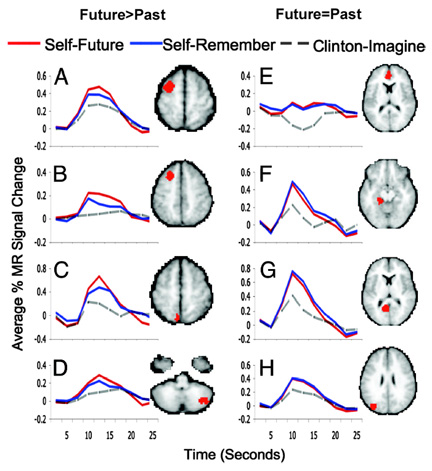

from Szpunar et al. (2007)

Future > Past

Future = Past

(A) L Middle Frontal

(E) Medial Frontal

(B) L Middle Frontal

(F) Parahippocampal Gyrus

(C) L Precuneus

(G) Posterior Cingulate

(D) R Cerebellum

(H) L Superior Occipital


The regions that were more active in imaging one's own future (not Bill's or Hillary's) included left lateral premotor cortex, our friend the precuneus in the left hemisphere, and the right cerebellum. [Note that left frontal cortex and right cerebellum are interconnected (Leiner et al., 1989; Niimura et al., 1999; Jansen et al., 2005]. The authors speculate that activation in a circuit that represents imagined motor movements is greater for novel movements that haven't occurred yet than for remembered motor sequences... hmmm.

Then there was a set of regions equally active when placing oneself in the past and in the future. These included elements of the dreaded default network (medial prefrontal, posterior cingulate). In fact, for the medial prefrontal ROI in panel E above, there was "less deactivation" (actually, the hemodynamic response looks flat and at zero) for self-related conditions than for the Clinton condition. More interesting are the other 3 regions: the parahippocampal gyrus (part of the medial temporal lobe memory system and home to the parahippocampal place area), posterior cingulate, and occipital cortex. The authors link these areas to autobiographical memories and spatial navigation. And perhaps, to Endel Tulving's conception of autonoetic consciousness, the ability to mentally represent and become aware of subjective experiences in the past, present, and future.


Karl K. Szpunar, Jason M. Watson, and Kathleen B. McDermott. Neural substrates of envisioning the future. Proc. Natl. Acad. Sci. Published online before print January 3, 2007. OPEN ACCESS ARTICLE.

The ability to envision specific future episodes is a ubiquitous mental phenomenon that has seldom been discussed in the neuroscience literature. In this study, subjects underwent functional MRI while using event cues (e.g., Birthday) as a guide to vividly envision a personal future event, remember a personal memory, or imagine an event involving a familiar individual. Two basic patterns of data emerged. One set of regions (e.g., within left lateral premotor cortex; left precuneus; right posterior cerebellum) was more active while envisioning the future than while recollecting the past (and more active in both of these conditions than in the task involving imagining another person). These regions appear similar to those emerging from the literature on imagined (simulated) bodily movements. A second set of regions (e.g., bilateral posterior cingulate; bilateral parahippocampal gyrus; left occipital cortex) demonstrated indistinguishable activity during the future and past tasks (but greater activity in both tasks than the imagery control task); similar regions have been shown to be important for remembering previously encountered visual-spatial contexts. Hence, differences between the future and past tasks are attributed to differences in the demands placed on regions that underlie motor imagery of bodily movements, and similarities in activity for these two tasks are attributed to the reactivation of previously experienced visual-spatial contexts. That is, subjects appear to place their future scenarios in well known visual-spatial contexts. Our results offer insight into the fundamental and little-studied capacity of vivid mental projection of oneself in the future.
From Behavioral Neuroscience 103: 998-1008, October 1989.


Parallel cerebello-frontal connections in the human brain. (Different parts of the cerebellum are linked to different areas of the frontal lobe. Because these connections enable the frontal areas to send signals to the cerebellum and receive signals from it, the cerebellum can serve as an information-processing adjunct to all of these frontal areas. Information can be processed repeatedly in such cerebro-cerebellar loops during the waking hours of life.)

This article generated a lot of press coverage, and some of it was actually fairly decent.
Scan shows how brains plot future

The Washington University team say that specific areas of the brain are active when thinking about upcoming events.

. . .

The researchers placed 21 volunteers into the MRI machine, then contrasted the scan results when they were asked to imagine vividly future events and recollect past memories.

The resulting images showed clear differences between a birthday already experienced, and a birthday yet to come.

In particular, when looking ahead, three particular areas of the brain were activated - the left lateral premotor cortex, the left precuneus and the right posterior cerebellum.

These brain areas are already known to be involved in the imagining of body movements, suggesting that when the human brain is thinking about the future, it does so in terms of distinct movements and actions that will happen at that point.
Brain Uses Past to Peer Into Future

References

Jansen A, Floel A, Van Randenborgh J, Konrad C, Rotte M, Forster AF, Deppe M, Knecht S. (2005). Crossed cerebro-cerebellar language dominance. Hum Brain Mapp. 24: 165-72.

Leiner HC, Leiner AL, Dow RS. (1989). Reappraising the cerebellum: what does the hindbrain contribute to the forebrain? Behav Neurosci.103: 998-1008.

Niimura K, Chugani DC, Muzik O, Chugani HT. (1999). Cerebellar reorganization following cortical injury in humans: effects of lesion size and age. Neurology 52: 792-7.

Subscribe to Post Comments [Atom]

Monday, February 05, 2007

Mental Time Travel


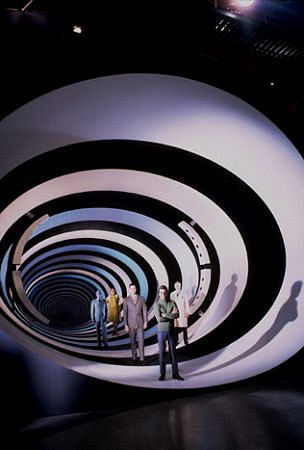
"The Time Tunnel" (1966)

Endel Tulving, that Great Canadian Psychology Researcher and memory theorist, has long held that episodic memory, or the vivid recollection of events and their associated spatiotemporal contextual details, affords humans the unique ability to engage in mental time travel:
What makes mental time travel possible?

Psychologist Endel Tulving offered a theory on our uniquely human ability to act today based on our past and future.

BY BRIDGET MURRAY

Remembering, to most of us, means recalling a past occurrence. But to Endel Tulving, PhD, the mechanisms of memory evoke the future as well. The reason? Memory allows us to mentally travel backward in time as well as into the future, explained Tulving, a University of Toronto professor emeritus and visiting professor in cognitive neuroscience at Washington University, in a presidential invited address at APA's 2003 Annual Convention in Toronto.

Tulving's theory stems from extensive memory research he's conducted since the 1950s at Toronto, Yale University and the Toronto-based Rotman Research Institute--and, he said, others' research supports it too. He proposed an official term for, and definition of, what makes such mental time travel possible:

Chronesthesia--A hypothetical brain/mind ability or capacity, acquired by humans through evolution, that allows them to be constantly aware of the past and the future.
As a side note, the view that chronesthesia (Kim, 2007) or autonoetic consciousness (Wheeler et al., 1995), or ecphory (Kapur et al., 1995; Steinvorth et al., 2006) are distinctly human abilities has not gone without debate (Clayton et al., 2003; Dere et al., 2006; Emery et al., 2004; Suddendorf et al., 1997; Zentall, 2006).

So what's new and exciting? Here's a question: must we be able remember the past to envision the future? The answer is yes, according to a recent study conducted in amnesic patients with damage to the hippocampus (Hassabis et al., 2007). As reported in Science's News of the Week:
A Surprising Connection Between Memory and Imagination

Greg Miller

According to a new study, people with amnesia caused by damage to the hippocampus, a brain region intimately tied to memory, have difficulty envisioning commonplace scenarios they might reasonably expect to encounter in the future. The findings challenge long-held views about the function of the hippocampus and the nature of memory.
The Janus center? The hippocampus (red box) may be as important for imagining the future as it is for remembering the past. CREDIT: ELEANOR MAGUIRE

More press coverage:

Amnesiacs May Be Cut Off From Past and Future Alike

. . . The results suggest that to the brain, remembered experience and imagined experience are reflections from the same mirror, rich inner worlds animated by almost identical neural networks.


Hmm, aren't these findings exaggerated just a little bit, Mr. Carey? Fortunately, one of the authors puts the results into a better context:
"We think that what the hippocampus provides is a scaffold for experience and imagination, and that scaffold is spatial," Maguire said. The brain's record of physical space, she said, appears to be necessary to infuse a scene with rich personal dimension.
Five people with amnesia participated in the study. These individuals had contracted limbic encephalitis or meningitis that resulted in brain damage that appeared to extend to regions beyond the hippocampus proper. Memory loss was not only anterograde (an inability to encode new information) but also substantially retrograde (loss of remote autobiographical memories), extending from 10 years premorbidly to the entire lifetime for one person. These folks are not your classic cases of hippocampal amnesia (e.g., see Bayley et al., 2006), because their retrograde memory impairments are much more severe. This blows up yet another controversy swirling around the importance of the hippocampus in the retrieval of remote memories (important: Nadel & Moscovitch, 1997; not: Bayley et al., 2003).

The amnesic and control participants were given cue sentences (e.g., "Imagine you're lying on a white sandy beach in a beautiful tropical bay") and asked to vividly imagine such a scene, describing it using as much detail as possible. They were told not to recount an actual memory, but to create something new. [NOTE: how do you verify that non-amnesic subjects avoided describing actual memories of such a scene?] At any rate, the amnesic patients did, indeed, perform more poorly than controls on this task.
Hassabis D, Kumaran D, Vann SD, Maguire EA. (2007). Patients with hippocampal amnesia cannot imagine new experiences. Proc Natl Acad Sci 104: 1726-31.

Amnesic patients have a well established deficit in remembering their past experiences. Surprisingly, however, the question as to whether such patients can imagine new experiences has not been formally addressed to our knowledge. We tested whether a group of amnesic patients with primary damage to the hippocampus bilaterally could construct new imagined experiences in response to short verbal cues that outlined a range of simple commonplace scenarios. Our results revealed that patients were markedly impaired relative to matched control subjects at imagining new experiences. Moreover, we identified a possible source for this deficit. The patients' imagined experiences lacked spatial coherence, consisting instead of fragmented images in the absence of a holistic representation of the environmental setting. The hippocampus, therefore, may make a critical contribution to the creation of new experiences by providing the spatial context into which the disparate elements of an experience can be bound. Given how closely imagined experiences match episodic memories, the absence of this function mediated by the hippocampus, may also fundamentally affect the ability to vividly re-experience the past.

Back in 1978, John O'Keefe and Lynn Nadel published a book called The Hippocampus as a Cognitive Map. [now freely available!] In it, they built a theory of hippocampal function around the existence of place cells (O'Keefe & Dostrovsky, 1971) and theta activity (Vanderwolf, 1969). [We'll leave theta aside for now.] Place cells are hippocampal neurons that show increased firing rates whenever an animal is in a specific location in the environment - the cell's "place field."

Thus, the current results of Hassabis et al. emphasize the importance of spatial representations and implicate a different area of the brain for mental time travel than the one initially suggested by Tulving and colleagues in the 90's (e.g., Wheeler et al., 1997) -- namely, right hemisphere prefrontal cortex. No matter, Professor Tulving contributed the article for publication as a member of the National Academy of Science. At any rate, it seems clear that it takes a whole village of brain regions to envision the future and remember the past. And what of chronesthesia?
As for hard scientific evidence of chronesthesia's existence, there's "zero, none, very little--it's just an idea," said Tulving. But, he said, emerging imaging research promises to help shed light on its brain mechanisms and has already suggested that higher-order thinking regions, such as the prefrontal cortex, are involved.

He admonished, however, that no function--chronesthesia or any other--"holds a particular seat in the brain; it's all over the place."
You can also find some interesting commentary about the role of hippocampus in Imagination and memory over at Gene Expression.

References

Bayley PJ, Hopkins RO, Squire LR. (2003). Successful recollection of remote autobiographical memories by amnesic patients with medial temporal lobe lesions. Neuron 38: 135-44.

Bayley PJ, Hopkins RO, Squire LR. (2006). The fate of old memories after medial temporal lobe damage. J Neurosci. 26:13311-7.

Clayton NS, Bussey TJ, Dickinson A. (2003). Can animals recall the past and plan for the future? Nat Rev Neurosci 4: 685-91.

Dere E, Kart-Teke E, Huston JP, De Souza Silva MA. (2006). The case for episodic memory in animals. Neurosci Biobehav Rev 30:1206-24.

Emery NJ, Clayton NS. (2004). The mentality of crows: convergent evolution of intelligence in corvids and apes. Science 306: 1903-7.

Kapur S, Craik FI, Jones C, Brown GM, Houle S, Tulving E. (1995). Functional role of the prefrontal cortex in retrieval of memories: a PET study. Neuroreport 14:1880-4.

Kim, A (2007). Which brain regions enable us to remember our past and anticipate our future? Sci Consciousness Rev.

Nadel L, Moscovitch M. (1997). Memory consolidation, retrograde amnesia and the hippocampal complex. Curr Opin Neurobiol. 7: 217-27.

O'Keefe J, Dostrovsky J. (1971). The hippocampus as a spatial map. Preliminary evidence from unit activity in the freely-moving rat. Brain Res. 34:171-5.

O'Keefe J, Nadel L. (1978). The Hippocampus as a Cognitive Map. Oxford University Press.

Steinvorth S, Corkin S, Halgren E. (2006). Ecphory of autobiographical memories: an fMRI study of recent and remote memory retrieval. Neuroimage 30: 285-98.

Suddendorf T, Corballis MC. (1997). Mental time travel and the evolution of the human mind. Genet Soc Gen Psychol Monogr 123: 133-67.

Wheeler MA, Stuss DT, Tulving E. (1997). Toward a theory of episodic memory: the frontal lobes and autonoetic consciousness. Psychol Bull 121:331-54.

Zentall TR. (2006). Mental time travel in animals: a challenging question. Behav Processes 72: 173-83.

Subscribe to Post Comments [Atom]

Tuesday, October 02, 2018

There Is a Giant Hole Where My Heart Used To Be

With profound grief, I announce that Sandra’s journey has come to an end.


Gardens at Government House, Victoria BC (June 2017)


Sandra Dawson was taken from this earth by the indiscriminate brutality of metastatic cancer. She died on October 2, 2018 at the age of 51. This horrific experience was not a “fight.” She did NOT lose a battle against the unchecked proliferation of malignant cells. Instead, Sandra saw the final phase of her life a journey. She was incredibly brave while facing the ravages of this terrible disease, and she was ultimately accepting of her fate. She was gracious and generous in sharing the final stages of her journey with friends and family, and also with nearly 25,000 followers of her @unsuicide Twitter account.1 There was an outpouring of love and support and visitors and flowers, which buoyed her spirits and made her feel loved.

She really loved flowers.


Sandra was many things – a writer, a blogger, a jewelry designer, a crochet artist, a mental health advocate, a board member of the Mental Health Commission of Canada, and the 2016 winner of a Sovereign's Medal for Volunteers from The Governor General of Canada, for over a decade of work in suicide prevention.


Government House, Victoria BC (June 2017)


September 10 was World Suicide Prevention Day, and Dr. Erin Michalak of CREST.BD wrote a touching tribute to Sandra’s work.

Sandra Dawson’s Legacy

. . .

“Most significantly, Sandra created the Unsuicide directory of online and mobile crisis supports, as well as a popular corresponding Twitter feed (@Unsuicide) with close to 25,000 followers. Her Unsuicide online supports are authentically grounded in her lived experience of bipolar disorder, but also unfailingly focused on helping people, regardless of their geography, to access credible and safe online and mobile support tools. In 2016, she was awarded the Sovereign’s Medal for Volunteers from the Governor General of Canada in acknowledgement of the impact of her work as an advocate for people facing mental health challenges and in suicide prevention.”

But mostly I think of her as a writer.


Radar Queer Reading Series, SF Public Library (October 2016)


She was also my partner and wife of nearly 12 years.


December 2017


We met in 2006 through our respective blogs, The Neurocritic and Neurofuture. The neuroblogging community was quite small then. Neurofuture started in January 2006 a blog about Brain Science and Neurofuturism that was ahead of its time (so to speak):
The future is now, in many ways. Neuroscience and psychiatry are fields that have experienced tremendous growth, especially in the last few decades, and these advances already have practical applications. … At the same time, much is still unknown…
. . .

Neuroscience, psychiatry, neuroethics and transhumanism are the four areas of focus for this blog. They have applications in a broad range of fields, and I'll be aggregating diverse information. Expect a lot of interesting links. I invite your comments.

In June 2006, she started a video blog, Channel N, that shared interesting content related to neuroscience, psychology, and mental health. Channel N eventually moved to Psych Central, a trusted mega-site for mental health, depression, bipolar, ADHD & psychology information. Sandra also wrote posts for World of Psychology, the main PsychCentral blog, including many Top 10 lists, which were always popular.

Along with Steve Higgins, she blogged for Omni Brain (from December 2006 – January 2008), which was “an exploration of the serious, fun, ridiculous / past, present, future of the brain and the science that loves it” – as part of the long-defunct Science Blogs network.


But Sandra’s real love was writing fiction (mostly under the pseudonym S. Kay). She wrote an unpublished novel (or two), flash fiction, and a novella that was published by Maudlin House (ironically titled Joy).


The advent of Twitter really changed her writing. She started writing microfiction, ultra-short stories in the form of Tweets (140 characters or less). Sometime they were standalone zaps that told an entire tiny tale.


Other times, she crafted a number of tweets together to tell a longer story. These were published in various venues and included pieces such as Neurotech Light and DarkCloud Glitches, Facebook Algorithm of Death,2 and her final piece, Goth Robots (robots were always a favorite theme; see the interview Weird words with S. Kay). Her blueberrio tumblr has a comprehensive list of her published work.


Her masterwork was Reliant, “an apocalypse in tweets” published in 2015 by the late tNY Press (but still available for purchase at Amazon):
“Selfies, sexbots, and drones collide in these interwoven nanofictions about a society before, during, and after its collapse. With dazzling humor and insight, debut author S. Kay reveals a future that looks disconcertingly like the present. Beautifully illustrated by Thoka Maer, Reliant is a bold examination of society's unrequited love for technology.”
There was a nice review in Entropy by Christopher Iacono.


But my proudest literary-moment-by-proxy was when Sandra read at Writers With Drinks, a long-standing, monthly series of readings by spectacular writers, held in a bar and hosted by the talented and amusing Charlie Jane Anders. It was a fun evening and the ideal crowd for reading Reliant.


Writers With Drinks (Nov. 14, 2015)


Sandra's next book, Lost in the Land of Bears (designed and published by Reality Hands), had a truly unique limited edition faux fur cover, but it's still available as an e-book.


James Knight wrote a great review at Sabotage Reviews.


Sandra was an early adopter of all forms of online communication. She was an avid blogger, social media user, and before that an online diarist. She was prescient about the future of social media:
I have no optimism that social media will bring the world together with mutual empathy improving society. Sheep are still sheep and their bleatings still need shepherds to make them a coherent flock. An important lesson for the next decade. The media is still the media and if anything, is more segregated than ever.

Sandra Dawson, January 4, 2007


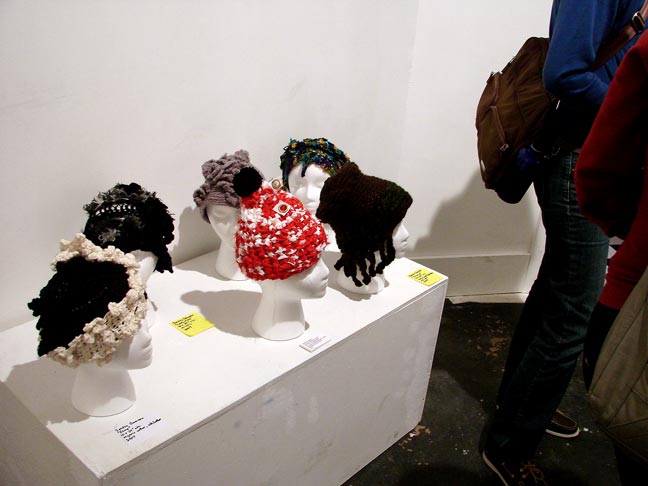
I could go on and on about her other wildly creative projects, like her Spambot Psychosis origami text cube, her beachpunk jewelry, her minibook necklaces (sample here), her upcycled cashmere brooches, her Postcards from the Post-Apocalypse, and her exhibit of crocheted art hats (and bonus EEG cap) at Femina Potens (the Cultivating Cozy exhibition).


January 18th, 2008


But what I can't express in words right now is how much I'll miss her.


Footnotes

1 Like me, she had many Twitter accounts and blogs and pseudonyms; the latter included Sandra K, Sandra Kiume, and S. Kay.

2 Sadly, this was based on a true story that had an even more tragic ending.


I love you.
RIP.

Subscribe to Post Comments [Atom]

Saturday, August 24, 2019

Ivanka Trump to Head New Agency of Precrime


A Precog capable of predicting future crimes in the film version of Minority Report.


In a strange twist suitable for the dystopian reality show broadcast from the West Wing dining room, a charity formed to fight pancreatic cancer has morphed into project SAFE HOME — “Stopping Aberrant Fatal Events by Helping Overcome Mental Extremes”.


After three highly publicized mass shootings killed 34 people in the US, a variation on the “guns don't kill people...” trope was issued by President Trump: “mental illness and hatred pulls [sic] the trigger, not the gun.” He was right about hatred: two of the shooters espoused white supremacist views, the other was a misogynist. But rather than anger the NRA with tiny incremental changes to control access to firearms, a better approach is to develop a national plan to stigmatize people with mental illnesses, who are more likely to be the victims of violent crime than the perpetrators:
White House considers new project seeking links between mental health and violent behavior

Bob Wright, the former NBC chair and a Trump friend, is one of the proposal’s supporters.

The White House has been briefed on a proposal to develop a way to identify early signs of changes in people with mental illness that could lead to violent behavior.

Supporters see the plan as a way President Trump could move the ball forward on gun control following recent mass shootings as efforts seem to be flagging to impose harsher restrictions such as background checks on gun purchases.

The proposal is part of a larger initiative to establish a new agency called the Health Advanced Research Projects Agency or HARPA, which would sit inside the Health and Human Services Department. Its director would be appointed by the president, and the agency would have a separate budget, according to three people with knowledge of conversations around the plan.

The Suzanne Wright Foundation, started by Bob Wright to fight pancreatic cancer after his wife died from the disease, has advocated for the formation of a DARPA-like federal agency called HARPA. The original vision for HARPA was to “leverage federal research assets and private sector tools to develop capabilities for diseases, like pancreatic cancer, that have not benefited from the current system.”


91% of pancreatic cancer patients die within 5 years– often because the cancer is too advanced to treat by the time of diagnosis. An early detection test for pancreatic cancer would be the most effective weapon to save lives from this disease. ... CodePurple advocates for HARPA ... as the most promising vehicle to develop a pancreatic cancer detection test.


According to the Washington Post:
The HARPA proposal was initially pitched as a project to improve the mortality rate of pancreatic cancer through innovative research to better detect and cure diseases. Despite internal support over the past two years, the model ran into what was described as “institutional barriers to progress,” according to a person familiar with the conversations. 

So why not flip your game by seizing a tragic moment in time to transform yourself into legacy-making material?
“[Trump is] very achievement oriented and I think all presidents have difficulties with science,” Wright said in an interview. “I think their political advisers say, ‘No that’s not a game for you,’ so they sort of back off a bit.”

He added: “But the president has a real opportunity here to leave a legacy in health care.”

The newly-realized HARPA would use artificial intelligence, machine learning, commercial surveillance technology (e.g., Apple Watches, Fitbits, Amazon Echo, Google Home), and “powerful tools [NOT] collected by health-care provides like fMRIs, tractography and image analysis.”
HARPA would develop “breakthrough technologies with high specificity and sensitivity for early diagnosis of neuropsychiatric violence,” says a copy of the proposal. “A multi-modality solution, along with real-time data analytics, is needed to achieve such an accurate diagnosis.”

And because of her vast experience in these technologies and her theoretical contributions to the neuroethics of predicting violent behavior, Ivanka Trump is the best person to lead such an effort:
“It would be perfect for her to do it — we need someone with some horsepower — someone like her driving it. ... It could get done,” said one official familiar with the conversations.

Further Reading

Oh Good, White House Reportedly Considering Dystopian Plan to Try to Detect the Next Mass Shooter

The Minority Report, by Philip K. Dick


Further Watching

Person of Interest, created by Jonathan Nolan (Memento)

   ( How Person of Interest Became Essential Science Fiction Television )

Subscribe to Post Comments [Atom]

Sunday, November 29, 2015

Carving Up Brain Disorders


Neurology and Psychiatry are two distinct specialties within medicine, both of which treat disorders of the brain. It's completely uncontroversial to say that neurologists treat patients with brain disorders like Alzheimer's disease and Parkinson's disease. These two diseases produce distinct patterns of neurodegeneration that are visible on brain scans. For example, Parkinson's disease (PD) is a movement disorder caused by the loss of dopamine neurons in the midbrain.


Fig. 3 (modified from Goldstein et al., 2007). Brain PET scans superimposed on MRI scans. Note decreased dopamine signal in the putamen and substantia nigra (S.N.) bilaterally in the patient.


It's also uncontroversial to say that drugs like L-DOPA and invasive neurosurgical interventions like deep brain stimulation (DBS) are used to treat PD.

On the other hand, some people will balk when you say that psychiatric illnesses like bipolar disorder and depression are brain disorders, and that drugs and DBS (in severe intractable cases) may be used to treat them. You can't always point to clear cut differences in the MRI or PET scans of psychiatric patients, as you can with PD (which is a particularly obvious example).

The diagnostic methods used in neurology and psychiatry are quite different as well. The standard neurological exam assesses sensory and motor responses (e.g., reflexes) and basic mental status. PD has sharply defined motor symptoms including tremor, rigidity, impaired balance, and slowness of movement. There are definitely cases where the symptoms of PD should be attributed to another disease (most notably Lewy body dementia)1, and other examples where neurological diagnosis is not immediately possible. But by and large, no one questions the existence of a brain disorder.

Things are different in psychiatry. Diagnosis is not based on a physical exam. Psychiatrists and psychologists give clinical interviews based on the Diagnostic and Statistical Manual (DSM-5), a handbook of mental disorders defined by a panel of experts with opinions that are not universally accepted. The update from DSM-IV to DSM-5 was highly controversial (and widely discussed).

The causes of mental disorders are not only biological, but often include important social and interpersonal factors. And their manifestations can vary across cultures.

Shortly before the release of DSM-5, the former director of NIMH (Dr. Tom Insel) famously dissed the new manual:
The strength of each of the editions of DSM has been “reliability” – each edition has ensured that clinicians use the same terms in the same ways. The weakness is its lack of validity. Unlike our definitions of ischemic heart disease, lymphoma, or AIDS, the DSM diagnoses are based on a consensus about clusters of clinical symptoms, not any objective laboratory measure.

In other words, where are the clinical tests for psychiatric disorders?

For years, NIMH has been working on an alternate classification scheme, the Research Domain Criteria (RDoC) project, which treats mental illnesses as brain disorders that should be studied according to domains of functioning (e.g., negative valence). Dimensional constructs such as acute threat (“fear”) are key, rather than categorical DSM diagnosis. RDoC has been widely discussed on this blog and elsewhere it's the best thing since sliced bread, it's necessary but very oversold, or it's ill-advised.

What does this have to do with neurology, you might ask? In 2007, Insel called for the merger of neurology and psychiatry:
Just as research during the Decade of the Brain (1990-2000) forged the bridge between the mind and the brain, research in the current decade is helping us to understand mental illnesses as brain disorders. As a result, the distinction between disorders of neurology (e.g., Parkinson's and Alzheimer's diseases) and disorders of psychiatry (e.g., schizophrenia and depression) may turn out to be increasingly subtle. That is, the former may result from focal lesions in the brain, whereas the latter arise from abnormal activity in specific brain circuits in the absence of a detectable lesion. As we become more adept at detecting lesions that lead to abnormal function, it is even possible that the distinction between neurological and psychiatric disorders will vanish, leading to a combined discipline of clinical neuroscience.

Actually, Insel's view dates back to 2005 (Insel & Quirion, 2005)....2
Future training might begin with two post-graduate years of clinical neuroscience shared by the disciplines we now call neurology and psychiatry, followed by two or three years of specialty training in one of several sub-disciplines (ranging from peripheral neuropathies to public sector and transcultural psychiatry). This model recognizes that the clinical neurosciences have matured sufficiently to resemble internal medicine, with core training required prior to specializing.

...and was expressed earlier by Dr. Joseph P. Martin, Dean of Harvard Medical School (Martin, 2002):
Neurology and psychiatry have, for much of the past century, been separated by an artificial wall created by the divergence of their philosophical approaches and research and treatment methods. Scientific advances in recent decades have made it clear that this separation is arbitrary and counterproductive. .... Further progress in understanding brain diseases and behavior demands fuller collaboration and integration of these fields. Leaders in academic medicine and science must work to break down the barriers between disciplines.

Contemporary leaders and observers of academic medicine are not all equally ecstatic about this prospect, however. Taylor et al. (2015) are enthusiastic advocates of a move beyond “Neural Cubism”, to increased integration of neurology and psychiatry. Dr. Sheldon Benjamin agrees that greater cross-discipline training is needed, but wants the two fields to remain separate. But Dr. Jose de Leon thinks the psychiatry/neurology integration is a big mistake that revives early 20th century debates (see table below, in the footnotes).3

I think a distinction can (and should) be made between the research agenda of neuroscience and the current practice of psychiatry. Neuroscientists who work on such questions assume that mental illnesses are brain disorders and act accordingly, by studying the brain. They study animal models and brain slices and genes and humans with implanted or attached electrodes and humans in scanners. And they study the holy grail of neural circuits using DREDDs and optogenetics. This doesn't invalidate the existence of social, cultural, and interpersonal factors that affect the development and manifestation of mental illnesses. As an non-clinician, I have less to say about medical practice. I'm not grandiose enough to claim that neuroscience research (or RDoC, for that matter) will transform the practice of psychiatry (or neurology) in the near future. [Though you might think differently if you read Public Health Relevance Statements or articles in high profile journals.]

Basic researchers may not even think about the distinction between neurology and psychiatry. Is the abnormal deposition of amyloid-β peptide in Alzheimer's disease (AD) an appropriate target for treatment? Are metabotropic glutamate receptors an appropriate target in schizophrenia? These are similar questions, despite the fact that one disease is neurological and the other psychiatric. There are defined behavioral endpoints that mark treatment-related improvements in either case. It's very useful to measure a change in amyloid burden4 using florbetapir PET imaging in AD [there's nothing similar in schizophrenia], but the most important measure is cognitive improvement (or a flattening of cognitive decline).


Does Location Matter?

In response to the pro-merger cavalcade, a recent meta-analysis asked whether the entire category of neurological disorders affects different brain regions than the entire category of psychiatric disorders (Crossley et al., 2015). The answer was why yes, the two categories affect different brain areas, and for this reason neurology and psychiatry should remain separate.


I thought this was an odd question to begin with, and an even odder conclusion. It's not surprising that disorders of movement, for example, involve different brain regions than disorders of mood or disorders of thought. From my perspective, it's more interesting to look at where the two categories overlap, with an eye to specific comparisons (not global lumping). For instance, are compulsive and repetitive behaviors in OCD associated with alterations in some of the subcortical circuits implicated in movement disorders? Why yes.

But let's take a closer look at the technical details of the study.

Read more »

Subscribe to Post Comments [Atom]

Monday, June 16, 2014

The Neuroscience of the Future


Neural prosthetics, brain-computer interfaces (BCI), “closed-loop” deep brain stimulation (DBS) devices, and a world without human brain disorders. The first three of these are already here... is the last one possible?

In the utopian world of The Hedonistic Imperative, an ambitious, admirable (and unlikely) 1995 manifesto by philosopher David Pearce, the goal is to “eradicate suffering in all sentient life” through paradise engineering —  which involves sophisticated applications of nanotechnology, genetic engineering, and psychopharmacology. And going beyond the eradication of suffering, “Life-long happiness of an intensity now physiologically unimaginable can become the heritable norm of mental health.” 1

Lest you think such speculation is limited to those wacky transhumanists, respected neuroscientists Kent Berridge and Morten Kringelbach have written seven reviews on the neuroscience of happiness and pleasure and well-being. In contrast to the vegan and animal rights supporter Pearce, however, Berridge & Kringelbach (e.g., 2012) see animal research as the key to unlocking the brain mechanisms of human pleasures.

Sure, we have BRAIN 2025 and the DARPA deep brain stimulation awards. But we're getting ahead ourselves here, aren't we? Using neuroscience to alleviate human suffering takes precedence over the attainment of  “a sublime and all-pervasive happiness” in wealthy Western post-industrial societies (doesn't it)? Doesn't it??


Neurofutures that aren't mine

There used to be a blog called Neurofuture (“Brain Science and Neofuturism”), written by . It covered topics like HedWeb and neuroscience nanotechnology and NeuroArm and the Blue Brain Project back in 2006-2007.

Since February 2012, there's been an unrelated NeuroFuture twitter feed @NeuroFutureNews (“Mind-blowing tweets! Follow me if you are interested in brain, bionics, BCI, robotics and mind-controlled news”). A guy named wolfgang berke has had the @neurofuture account since March 2010, but he hasn't tweeted once.


And now, there's NeuroFutures 2014, a conference in Seattle starting tomorrow:

NeuroFutures Conference: June 17 - 18, 2014

Thought leaders in research, engineering, industry, and clinical domains will explore how the intersection of neurotechnology innovations in neuromodulation, brain mapping, neuroimaging, big data analytics, and brain computer interfaces will transform our understanding of neural systems and enable life-changing medical treatments.

If you're already in Seattle, you can attend a public lecture by a prominent DBS neurosurgeon today at 7 PM:

NeuroFutures Public Lecture: 7:00 PM, June 16

Dr. Andres Lozano from the University of Toronto will kick off the NeuroFutures summit with a talk on “The Future of Brain Stimulation: Parkinson’s, Depression, Alzheimer’s and beyond" (see his related TED Talk here). Afterwards, he will discuss his work with science educator and author David Heil, and field questions from the audience.

Organizational and industry sponsors include Center for Sensorimotor Neural Engineering, Allen Institute for Brain Science, Cyberonics, and Neurotech Business Report,3 among others.

Why NeuroFutures?

Problem: One in four U.S. adults suffer from a diagnosable neurological disorder and a quarter of these are seriously disabled as a result. These patients endure immense physical and emotional suffering, and their family members and caregivers bear a heavy emotional and financial burden. From a scientific standpoint, the human brain is the most sophisticated computing system in the known universe, and we are only starting to understand how it works.
. . .

Plan: To accelerate the pace and impact of innovation we will bring together neurotechnology thought leaders from different disciplines to exchange ideas and forge collaborations at the two-day NeuroFutures Conference on June 17 and 18, 2014 in Seattle, Washington. We will highlight people and resources in the Northwest that position the region to play a leading role in our NeuroFuture...


So what will it be... better living through chemistry (pharmaceuticals), biotechnology, or engineering? With conference sessions on BCI and Neuromodulation Innovations, Learning, Plasticity, and Adaptation in Neural Interfaces, and The Past, Present, and Future of Closed-loop Neuromodulation, one might think it's a great time to be a Neuroengineer at places like the Center for Sensorimotor Neural Engineering, the Brain-Machine Interface Systems Laboratory, and the Neural Prosthetic Systems Laboratory.


Footnotes

1 The HedWeb manifesto has been online in its entirety since 1995, I believe. For many years, the labyrinth of links and early-acquisition domain names such as biopsychiatry.com, huxley.net, mdma.net, opioids.com, cannabis.net, and general-anaesthesia.com were entirely unattributed, except for affiliation with an organization known as BLTC RESEARCH. But be careful, or you could fall down the rabbit hole of supercentenarian.com or reproductive-revolution.com or oxytocin.org or sensualism.com or nootropics.com or.....2

2 OMFG! There are 2,244 PARADISE-ENGINEERING BLTC WEBSITES as of JUNE 2014:
Paradise-engineering websites (2014)
Good domains for a better world?

3 Neurotech Business Report was the first to break the news about the failed BROADEN clinical trial for treatment-resistant depression, and they've continued their close coverage of the neuromodulation market.


top image via Alternative Media News


Figure 1. Pleasure Cycles (Berridge & Kringelbach, 2012), from Building a neuroscience of pleasure and well-being.

Subscribe to Post Comments [Atom]

Tuesday, May 27, 2008

Encephalon - 46th Edition


Welcome to the Forty-Sixth Edition of Encephalon, a neuroscience blog carnival.

Dave and Greta Munger of Cognitive Daily just attended the 20th Annual Convention of the Association for Psychological Science in Chicago, and their live reports are hot off the internet. Read about The persistence of racism even among the well-intentioned and Doing algebra -- it's the little things that count.

Also on the educational front, Kylie from PodBlack Blog brings us Girls Got What? Competitions, Science Careers and Benefits, an investigation into whether it's really just brains or really just well-established strategy.

From Chris at Developing Intelligence, we can learn about Impulsivity Due to Distortions in Time: Hyperbolic Discounting and Logarithmic Time Perception. What is hyperbolic discounting? Wikipedia tell us:
In behavioral economics, hyperbolic discounting refers to the empirical finding that people generally prefer smaller, sooner payoffs to larger, later payoffs when the smaller payoffs would be imminent; but when the same payoffs are distant in time, people tend to prefer the larger, even though the time lag from the smaller to the larger would be the same as before.
Typically, cognitive control functions are thought to be a key factor in the ability to delay for a larger payoff. But there's an alternative, as Chris explains:
...if time is not represented linearly by the mind, perhaps it is that peculiarity which generates impulsivity, rather than a failure of control! ..... [Zauberman et al.'s] forthcoming paper in the Journal of Marketing Research demonstrates conclusively that the hyperbolic function that characterizes discounting rate does indeed reflect nonlinearities in time perception.
Attention-deficit hyperactivity disorder is (of course) associated with impulsivity...could there be an element of exaggerated time distortion in their hyperbolic discounting functions? What a wacky idea!

Alvaro, our Encephalon host at Sharp Brains, brings us a more tested idea, Mindfulness Meditation for Adults & Teens with ADHD (by guest blogger Dr. David Rabiner). Mindfulness has been shown (by Davidson and his colleagues, among others) to improve attentional focus and to decrease emotional reactivity.

Buddha brain image from Ellerman.info

The Neurocritic has a past post, Present Tense, that reviews the literature on neuroimaging studies of mindfulness-based meditation.

Speaking of a practice associated with Buddhism, Daniel at Neuroanthropology enters the fray engendered by a recent op-ed piece in the New York Times (by columnist David Brooks) in The Neural Buddhists of David Brooks. Daniel is sympathetic to much of his viewpoint (against hard-wired morality, for instance), but for hard-core materialists, Brooks' most troubling comment is
Over the past several years, the momentum has shifted away from hard-core materialism.
Next, Vaughan from Mind Hacks writes about the rare phenomenon of 'supernumerary phantom limbs' in Phantom extra limbs. A recent paper in Neurology reported on two case studies following hemorrhage in the pons, part of the brain stem:

Both patients had the experience of having a third arm and a third leg... One distressing element for the female patient was that although the patient could 'move' the phantom arm voluntarily, "she described occasional loss of control and feeling strangulated by the phantom arm around the neck".

Speaking of arms, Sandra from Channel N is very excited to present
a video aboot the neuroArm, a robotic system that enables a surgeon to perform remote haptic-assisted neurological microsurgery using real-time MRI. One of the most advanced robots in existence, it's a very exciting Canadian achievement.

The first-ever surgery was successfully performed by Dr. Garnette Sutherland at the University of Calgary on May 12, 2008.
Neuroscientifically Challenged explains The Neuroscience of Distributive Justice. What is distributive justice, you might ask?
...how goods and benefits should be dispersed throughout a society in a fair and just manner. As an extreme example of this dilemma, imagine you are commissioned to deliver 100 lbs. of food to a famine-stricken region that consists of two villages a hundred miles apart. If you deliver half of the food to the first village, then travel to the second, 30 lbs. of the food will spoil during the trip...

Philosophers have offered several solutions to debates of this nature. Utilitarianism... asserts that one’s primary goal should be the achievement of a maximal amount of good or happiness. In the situation described above, a utilitarian might opt to deliver all of the food to the first village. ..... Another approach to such a quandary is known as deontological ethics, which emphasizes not the consequences of one’s actions, but whether the actions are right or wrong, just or unjust. From a deontological perspective, it would be unjust to distribute the food unequally.
To examine the trade-off between equity and efficiency, Hsu et al. (2008) devised a task in which the participants decided on how to allocate money to children living in an orphanage in northern Uganda. You can see an example of an experimental trial in this must-see movie from the paper's Supporting Online Material (embedded below).


Movie s2
No Switch Trial. Illustration of a trial where the subject does not switch the lever. Animation speed is increased for illustration purposes. See Fig. 1 for actual duration of events and screens.

You can bet that The Neurocritic will have something to say about this study in the near future...

Neuroscientifically Challenged also poses the question, Would You Vaccinate Your Kids Against Drugs?

Next up are Brain Games or Drugs for Cognitive Enhancement, written by Sharp Brains guest columnist Pascale Michelon, Ph.D. She discusses the exciting recent finding by Jaeggi et al. (2008): Improving Fluid Intelligence With Training on Working Memory. It's a growing field. For more about working memory, be sure to read Developing Intelligence on The Digital Resolution of the Mind: Discrete Precision in Working Memory.

Jake from Pure Pedantry has submitted a very sad but informative post, Sen. Kennedy and Glioma, which deals with Senator Ted Kennedy's brain cancer, treatment, and prognosis. The majority of these malignant brain tumors are generally fatal. Sen. Kennedy has been a leading proponent of mental health parity, the proposal that insurance companies cover mental disorders and other medical ("physical") disorders in an equivalent manner.

Speaking of which, Dr. Shock writes a critical piece about the pitfalls of supportive psychotherapy in Supportive Psychotherapy mostly Novice Pilots Flying In The Dark Without Maps. Meanwhile, Dr. Deb looks at recent neurobiological research linking burning incense and possible new antidepressant medications in Smell is Swell. A brand new class of depression and anxiety drugs might be right under our noses! Hippies might have something going with that incense crap!

PodBlack Blog asks us to Chalk It Up To Forensic Science and watch
a lecture presentation at a local Science Education centre that provides not only insights to the minds behind crime-solving but how the public perception mind the messages on TV.
Finally, in My Mascot Only Gave Me Sex Appeal, Kylie tells us that
it may seem strange that the Chinese are willing to blame toys for recent disasters but no weirder than other superstitions that work in people's favour.
Why, that's no stranger than reference to a scary bunny furry wearing a gigantic clock in The Neurocritic's post about why You're My Favorite Person... (which is really about how watching movie clips with your favorite actress can boost your peripheral levels of dopamine and circulating natural killer cells, and activate your medial prefrontal cortex, thalamus, hypothalamus, subcallosal gyrus, posterior cingulate cortex, superior temporal gyrus, and cerebellum).

ADDENDUM: A late-breaking submission from Mo at Neurophilosophy covers the recent finding that a protein extracted from green algae can partially restore visual function: Channelrhodopsin restores vision in blind mice.

That's it for this edition. The next Encephalon will appear on June 9 at Channel N.

Subscribe to Post Comments [Atom]

eXTReMe Tracker